Pallet Rack Identification Guide ⎻ Overview

Understanding pallet rack styles – teardrop, structural, drive-in, and cantilever – is crucial for efficient warehouse management and safety compliance.
Identifying components like beams, uprights, and punch hole patterns enables proper system assessment and compatibility checks for seamless integration.
Pallet racking systems are essential for maximizing warehouse space and optimizing storage density. These systems, available in diverse types – selective, double deep, carton flow, and cantilever – cater to varied operational needs. Proper identification of these systems is paramount for safety, maintenance, and expansion.
Understanding the core components – uprights, beams, and connectors – is the first step. Recognizing different styles, like teardrop versus structural, allows for accurate assessment and informed decision-making regarding compatibility and load capacity. This guide provides a foundational understanding for effective pallet rack management.
Importance of Correct Identification
Accurate pallet rack identification is critical for warehouse safety and operational efficiency. Misidentified components can lead to structural failures, potentially causing injuries and product damage. Correct identification ensures compatibility when adding to or modifying existing systems, preventing costly errors.
Furthermore, knowing the manufacturer and rack type facilitates access to specific load capacity information and maintenance guidelines. This knowledge is vital for compliance with safety regulations and maintaining a secure working environment. Proper identification streamlines parts ordering and simplifies system inspections.

Common Pallet Rack Styles
Several common styles exist, including teardrop, structural, drive-in, and push-back racks, each offering unique features for diverse warehousing needs and layouts.
Teardrop Pallet Racks
Teardrop pallet racks are widely recognized for their distinctive upright column shape, resembling a teardrop. This style is incredibly popular due to its cost-effectiveness and ease of assembly. Identifying these racks involves noting the unique, formed column profile, differing from the smoother structural designs.
Beam connectors feature a hook-on design, easily attaching to the uprights. Characteristics include readily available used components and a generally lighter gauge steel construction compared to structural racks. Recognizing these features aids in quick identification and assessment of existing systems.
Identifying Teardrop Upright Features
Teardrop uprights are primarily identified by their distinct, formed column shape – resembling a teardrop, hence the name. These columns aren’t smooth; they exhibit a noticeable indentation or curve on the vertical supports. Look for the characteristic ‘hook’ shaped slots designed for beam connectors.
The steel gauge is typically lighter than structural racks, and the finish is often paint, though variations exist. Careful observation of the column profile is key; it’s the defining feature separating teardrop from other pallet rack types, ensuring accurate system identification.
Teardrop Beam Connectors & Characteristics
Teardrop beam connectors utilize a hook-on design, fitting directly into the teardrop-shaped slots on the uprights. These connectors typically feature a stamped or rolled steel construction, exhibiting a distinct ‘L’ shape when viewed from the end. Beam length varies based on storage needs, and capacity markings are crucial for safe load handling.
Connector compatibility is vital; ensure beams and connectors are matched for secure locking. Observe for any deformation or damage to the hooks, as compromised connectors pose a safety risk. Proper engagement is confirmed by an audible ‘click’ when installed correctly.
Structural Pallet Racks
Structural pallet racks distinguish themselves through welded frame construction, utilizing hollow structural steel (HSS) columns. Unlike teardrop racks, they lack punched uprights, relying instead on bolted connections for beam placement. This design offers robust strength and high load capacities, making them ideal for demanding applications.
Identifying structural racks involves observing the continuous column profiles and bolted connectors. These systems often feature heavier gauge steel compared to teardrop styles. Careful inspection of welds and bolted connections is essential to ensure structural integrity and safe operation within the warehouse environment.
Structural Rack Column Profiles
Structural rack columns are typically constructed from rectangular or square hollow structural steel (HSS) tubing. These profiles provide exceptional rigidity and strength, differentiating them from the rolled steel shapes used in teardrop systems. Column sizes vary based on load requirements, but common dimensions include 4×3 inches or 5×3 inches.
Identifying column profiles involves visually inspecting the steel shape – a seamless, welded tube. Absence of punch holes is a key characteristic. Look for consistent weld quality along the column seams, indicating a robust and reliable structural connection. These profiles contribute significantly to the rack’s overall load capacity.
Beam and Connector Styles in Structural Racking
Structural pallet racking beams differ significantly from teardrop styles; they utilize welded construction. Beams are typically made from heavy-gauge steel tubing, often with a box section design, providing high strength-to-weight ratio. Connectors are also welded directly to the beam, rather than utilizing hook-on mechanisms.
Identifying beam styles involves observing the fully welded connection between the beam and upright connector; Look for a clean, robust weld. Beam length and capacity markings are usually stamped directly onto the steel. These systems prioritize strength and are often used for heavier loads.
Drive-In Pallet Racks
Drive-in pallet racks offer high-density storage, allowing forklifts to drive directly into the racking structure to place and retrieve pallets. This system utilizes rails that support the pallets, and typically features a last-in, first-out (LIFO) inventory method.
Key features include a single aisle for access, maximizing storage space. Drive-in racks are ideal for storing large quantities of similar products. Identifying these systems is straightforward due to the prominent rail system running along the depth of the rack.
Drive-In Rack Rail Configuration
Drive-in rack rail configuration is a defining characteristic of this system. Rails are typically spaced to accommodate pallet widths, creating pallet positions along the rack’s depth. These rails are often welded or bolted directly to the upright frames, providing robust support.
Rail height is consistent throughout the system, ensuring level pallet placement. The number of rail levels dictates storage capacity. Observing the consistent rail spacing and secure attachment to the uprights is key to identifying a drive-in rack configuration.
Identifying Drive-In System Components
Drive-in pallet racks feature specialized components. Key identifiers include the deep rack structure with rails extending into the bay, allowing for high-density storage. Look for the lack of uprights between pallet locations within the bay – a defining feature.
Entry guides are crucial for proper pallet placement and are easily spotted at the front of each bay. These systems typically lack beam levels found in other rack types. Identifying these components confirms a drive-in system, optimized for last-in, first-out (LIFO) inventory.
Push Back Pallet Racks
Push back racking utilizes nested carts on inclined rails within each storage bay. These carts allow for multiple pallets to be stored deep, enhancing storage density. Identifying these systems involves observing the rails extending into the rack structure and the presence of these nested carts.
Pallet entry is from the front, with subsequent pallets pushing the earlier ones back. This creates a LIFO (last-in, first-out) system. Look for the characteristic angled rails and the visible carts within the bays to confirm a push-back configuration.
Push Back Rack Cart Systems
Push back rack systems rely on carts rolling on inclined rails within the rack structure. These carts are typically constructed of steel and designed to handle substantial pallet weights. Identifying the cart system involves observing the number of carts per bay – usually 2 to 5 – and their nested arrangement.
Cart wheels and rails exhibit wear over time, so inspection for damage is crucial. The carts’ movement facilitates high-density storage, but proper maintenance ensures smooth operation and prevents system failures. Look closely at the rail angles and cart construction.
Distinguishing Push Back from Drive-In Racks
Drive-in racks allow forklifts to enter the bay and place pallets directly onto the rails, utilizing depth. Push back racks, conversely, use carts on inclined rails; pallets are loaded onto the carts, which are then pushed back by subsequent loads.
Visually, drive-in lacks carts. Push back exhibits visible cart systems within each bay; Drive-in is typically first-in, last-out, while push back offers a limited first-in, last-out approach. Identifying these differences is key for proper warehouse organization and operational efficiency.

Advanced Pallet Rack Types
Specialized systems, like double deep, carton flow, and cantilever racks, optimize space and handling for specific needs, enhancing warehouse productivity.
Double Deep Pallet Racking
Double deep racking increases storage density by placing pallets two deep, requiring specialized forklifts for access. Distinguishing it from single deep involves observing the rack’s depth and forklift maneuverability.
Beam length and capacity are critical considerations; longer beams support the increased load depth, while capacity markings dictate maximum weight limits. Careful evaluation ensures structural integrity and prevents overloading. Proper implementation maximizes space utilization while maintaining safety standards within the warehouse environment.

Double Deep vs. Single Deep Configuration
Single deep racking allows direct access to every pallet, utilizing a first-in, first-out (FIFO) system. Double deep, conversely, places pallets two deep, reducing aisle space but requiring the removal of the front pallet to access the rear.
Visually, double deep systems appear deeper and necessitate specialized reach trucks. Single deep offers greater selectivity, while double deep maximizes density. Choosing between them depends on inventory turnover and available space, balancing accessibility with storage capacity.
Beam Length and Capacity Considerations
Beam length directly correlates to the pallet size and load dimensions they will support; incorrect sizing compromises stability. Capacity markings, typically stamped on the beam’s face, indicate the maximum weight load per pair.
Always verify these markings align with the intended load weight. Overloading beams risks catastrophic failure. Consider beam deflection – longer beams deflect more under load. Proper beam selection ensures structural integrity and worker safety within the racking system.
Carton Flow Pallet Racking
Carton flow racking utilizes gravity to move goods, employing roller track systems for first-in, first-out (FIFO) inventory management. Identifying features include inclined tracks within the rack structure, facilitating smooth product flow to the picking face.
Components consist of rollers, tracks, and load supports. These systems are ideal for high-volume, fast-moving items. Look for variations in roller type (steel, plastic) and track configuration to determine system capacity and suitability for specific product types.
Roller Track Systems
Roller track systems are the core of carton flow racking, utilizing a series of rollers within each level to enable forward movement of goods. Identifying characteristics include the consistent spacing and alignment of these rollers, creating a smooth flow path.
Roller materials vary – steel rollers are robust for heavier loads, while plastic rollers are quieter and suitable for lighter items. Observe the roller diameter and track incline to assess capacity and flow rate. Proper maintenance ensures continuous, efficient operation of the system.
Identifying Carton Flow Rack Components
Carton flow racks feature distinct components beyond standard racking. Look for the inclined roller tracks, typically steel or plastic, within each level, facilitating first-in, first-out inventory flow. Entry and exit sides are crucial; entry points usually have loading stops, while exit sides allow for easy retrieval.
Side rails guide cartons along the rollers, and support structures ensure stability. Identifying these elements helps determine rack capacity and configuration. Inspect for wear on rollers and rails to assess system health and prevent disruptions.

Cantilever Pallet Rack
Cantilever racks are uniquely designed for long, bulky items like lumber, pipes, or appliances, lacking front columns for unobstructed access. Uprights feature load-bearing arms extending outwards, adjustable for varying lengths. Systems are either single-sided, accessing loads from one side, or double-sided, maximizing space utilization.
Arm profiles – rectangular or tubular – indicate capacity. Identifying the arm’s connection style to the upright is key; welded arms are permanent, while bolted arms offer adjustability. Inspect arms for bends or damage, crucial for maintaining load safety.
Single and Double-Sided Cantilever Systems
Single-sided cantilever racks offer access to stored items from only one direction, ideal when space constraints dictate a wall-mounted configuration. Double-sided systems, conversely, allow loading and unloading from both sides, effectively doubling storage density within the same footprint.
System choice depends on workflow and available space. Double-sided racks require more aisle space for operation. Identifying the system type is straightforward – observe access points and the upright’s structural design. Proper selection optimizes warehouse efficiency and safety.
Identifying Cantilever Upright and Arm Profiles
Cantilever uprights typically feature a heavy-duty, column-like profile with evenly spaced slots for arm insertion, differing from standard pallet rack uprights. Arms are generally rectangular and connect directly into these slots, lacking the beam connectors of other systems.
Profile variations exist based on load capacity; heavier loads require thicker arms and uprights. Observing the steel gauge and slot configuration aids identification. Look for rolled steel construction, a hallmark of cantilever systems, ensuring robust support for long, bulky items.
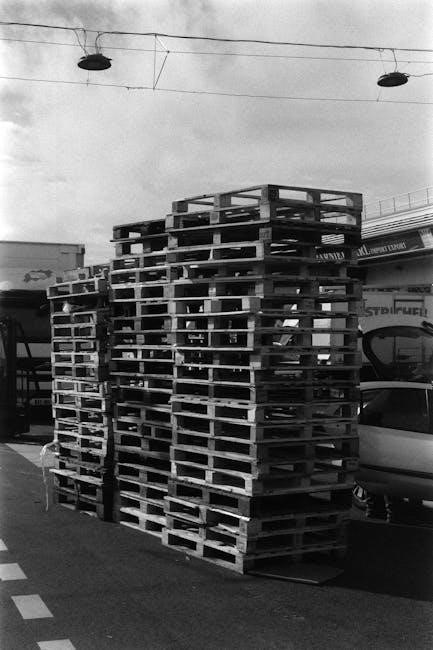
Identifying Pallet Rack Components
Key components – beams, uprights, and connectors – require careful examination to determine rack type, capacity, and compatibility for safe, efficient operation.
Pallet Rack Beam Identification
Accurate beam identification is vital for maintaining warehouse safety and maximizing storage capacity. Beams are typically marked with crucial information, including length and load capacity, often stamped directly onto the steel. Connector types – step beams, box beams, and others – dictate compatibility with specific upright systems.
Understanding these markings ensures proper load distribution and prevents overloading. Inspect connectors for damage or wear, as compromised connections can lead to structural failure. Always verify compatibility before interchanging beams between different racking systems to avoid instability.
Beam Length and Capacity Markings
Pallet rack beams consistently feature stamped markings indicating their length and maximum load capacity. Length is usually expressed in inches or feet, clearly visible on the beam’s web. Capacity is often denoted in pounds and represents the safe working load per pair of beams.
These markings are critical for safe warehouse operation; never exceed the stated capacity. Regularly inspect these markings for clarity, as wear and tear can obscure the information. Accurate interpretation prevents structural failure and ensures worker safety within the storage environment.
Beam Connector Types and Compatibility
Pallet rack beam connectors vary significantly based on rack style – teardrop, structural, and others. Teardrop racks utilize specialized connectors with a distinctive ‘teardrop’ shape, ensuring secure locking. Structural racks employ bolted connections, demanding proper torque specifications for stability.
Compatibility is paramount; never mix connector types. Using incorrect connectors compromises structural integrity and poses a safety hazard. Always verify connector compatibility with the specific rack system before installation or replacement, referencing manufacturer guidelines for optimal performance and safety.
Pallet Rack Upright Identification
Identifying pallet rack uprights begins with assessing frame dimensions – height and width – crucial for determining load capacity and compatibility. Structural uprights feature welded construction, while teardrop racks utilize roll-formed steel with distinctive punch hole patterns.
Examining the upright’s gauge (steel thickness) indicates its strength; Heavier gauge steel signifies greater load-bearing capability. Careful observation of these features, alongside punch hole patterns, allows for accurate upright identification and ensures proper system configuration for safe and efficient warehouse operations.
Upright Frame Dimensions
Upright frame dimensions – height and depth – are primary identifiers. Height dictates the maximum pallet storage level, while depth impacts stability. Standard upright heights range from 8 to 12 feet, but can exceed this depending on warehouse needs.
Measuring these dimensions accurately is vital for compatibility with existing beams and accessories. Frame width varies based on rack type; teardrop racks are typically 3 inches, while structural racks are wider. Precise dimensional data ensures safe load distribution and prevents structural failures within the racking system.
Identifying Punch Hole Patterns
Pallet rack punch hole patterns are key to determining brand and load capacity. Manufacturers utilize unique arrangements to ensure beam compatibility. Common patterns include those from Unarco, Dexion, and Interlake, each with distinct hole spacing and configurations.
Decoding these patterns requires a punch hole guide or experienced inspection. Vertical hole spacing typically increments in 1-inch intervals, while horizontal patterns vary. Correct identification prevents mismatched components and maintains structural integrity, ensuring safe and efficient warehouse operations.

Using Punch Hole Patterns for Identification
Decoding punch hole styles reveals manufacturer details and system compatibility, vital for safe expansion or replacement of pallet rack components within a warehouse.
Decoding Pallet Rack Punch Hole Styles
Pallet rack punch hole patterns are a key identifier, often revealing the manufacturer and rack style. Different companies utilize unique configurations – round, oval, or uniquely shaped holes – strategically placed along the upright frame. These patterns aren’t random; they dictate beam compatibility and load capacity.
Common manufacturers, like Unarco, Interlake, and Dexion, each have distinct punch hole layouts. Identifying these patterns allows for accurate parts ordering and ensures structural integrity when adding or replacing components. Careful observation of hole shape, size, and spacing is essential for correct identification.
Common Manufacturer Punch Hole Patterns
Unarco pallet racks typically feature a distinctive “diamond” or oval-shaped punch hole pattern, easily recognizable along the upright frames. Interlake racks often exhibit a more rounded hole configuration, sometimes with a specific spacing that differentiates them. Dexion, another prominent manufacturer, utilizes a unique hole pattern, often smaller and more closely spaced than others.
Identifying these patterns isn’t always straightforward, requiring close inspection and comparison charts. Knowing the common layouts aids in sourcing compatible beams and ensuring safe, reliable rack system operation. Accurate identification prevents mismatched components and potential structural failures.
Pallet Rack Color Coding
Standard pallet rack colors often indicate specific functions or ownership within a warehouse. Blue racks are commonly used for general storage, while orange frequently signifies selective pallet racking systems. Green may denote carton flow or specific product categories. However, color coding isn’t universally standardized.
Companies often implement their own color schemes for internal organization, such as designating colors for different departments or product types. Consistent color coding improves warehouse efficiency, reduces picking errors, and enhances overall safety by visually guiding personnel. Always verify a facility’s specific coding system.
Standard Pallet Rack Colors and Their Meanings
While not a rigid industry standard, certain colors are frequently associated with pallet rack functions. Dark Blue is overwhelmingly common for general pallet racking, offering versatility. Orange often indicates selective rack systems, prioritizing direct access to each pallet. Green frequently designates carton flow racks, facilitating FIFO (First-In, First-Out) inventory.
Gray racks can signify structural systems, known for their robustness. However, these are generalizations; many facilities employ custom color schemes for internal organization, denoting departments or product lines. Always confirm the specific meaning within a given warehouse environment.

Safety and Compliance
Regular inspections for damage and ensuring adherence to proper load capacities are paramount for maintaining a safe and compliant pallet rack system.

Checking for Damage and Wear
Consistent rack inspections are vital for warehouse safety. Look for bent uprights, damaged beams – especially at connection points – and compromised anchors.
Rust and corrosion weaken structural integrity, requiring immediate attention. Check for missing or damaged safety clips, and ensure baseplates are securely fastened to the floor.
Document all findings, noting the location and severity of damage. Promptly repair or replace damaged components to prevent catastrophic failures and maintain operational efficiency. Ignoring wear significantly increases risk.
Ensuring Proper Load Capacity
Pallet rack capacity is clearly marked on beam components; never exceed these limits. Consider load distribution – evenly spread weight prevents localized stress.
Factor in pallet weight, including the goods themselves, plus the pallet’s material. Regularly verify that loaded pallets don’t surpass the rack’s rated capacity.
Understand beam length impacts capacity; longer beams generally support less weight. Implement a system for tracking load weights and rack configurations to guarantee safety and prevent structural failures.